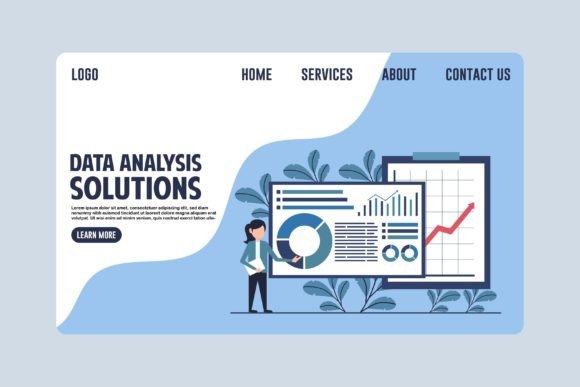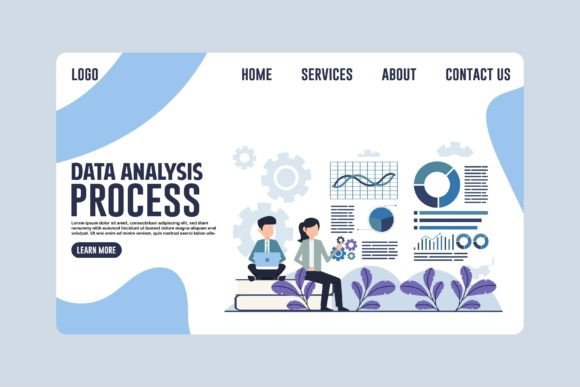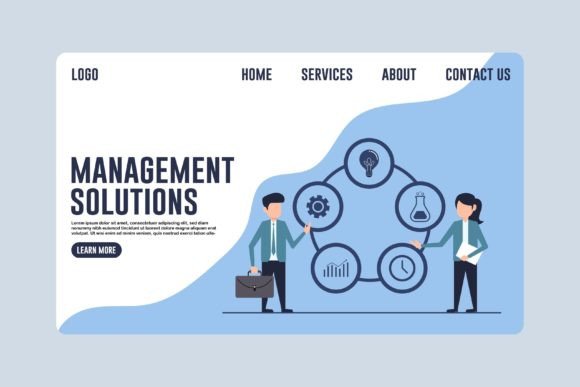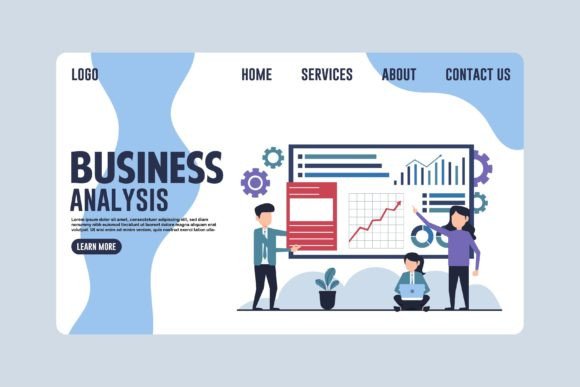
Business Analysis Landing Page Design: A Guide to Scalable Vector Excellence
In the fast-paced world of digital marketing and corporate communication, the first impression often dictates the success of a campaign. A Business Analysis Landing Page Design serves as that critical entry point, translating complex data and strategic insights into a visual narrative that stakeholders can understand instantly. However, many professionals overlook the technical foundation of these designs, opting for quick fixes that ultimately hinder scalability and professional presentation. The difference between a functional page and a truly effective one often lies in the choice of file formats and the flexibility of the assets used.
When you invest in a high-quality template where every element is 100% vector, you are not just buying an image; you are acquiring a versatile toolkit. Unlike raster images that degrade when enlarged, vector graphics maintain crisp edges and perfect clarity at any size. This distinction is vital for business analysis contexts where charts, infographics, and process flows must be readable on everything from a mobile screen to a massive conference room projector.
The Critical Importance of Vector-Based Assets
One of the most common misunderstandings among designers and project managers is assuming that all digital illustrations behave the same way. When working with a Business Analysis Landing Page Design, the ability to transform, scale up or down, and recolor without losing quality is not a luxury—it is a necessity. Raster-based templates often look acceptable at their original resolution but become pixelated and blurry when stretched to fit a hero banner or shrunk for a mobile web view. This loss of fidelity can make a professional business proposal appear amateurish.
By choosing a design template built entirely on vector principles, you ensure that your visuals remain sharp regardless of the output medium. Whether you need to create a detailed infographic for a white paper or a sleek hero image for a website, the underlying geometry remains intact. This flexibility allows you to adapt a single source file for multiple purposes, saving time and ensuring brand consistency across all channels.
Common Pitfalls in Selecting Design Templates
Even experienced creators can fall into traps when sourcing design assets. The following mistakes frequently undermine the potential of a project:
- Ignoring File Formats: Many users download JPGs or PNGs and assume they are sufficient. While these formats are great for final delivery, they are terrible for editing. If you cannot access the source files, you are locked into the original layout and colors.
- Overlooking Editability: A static design limits your ability to customize content. In business analysis, data changes frequently. A template that does not allow you to easily add, remove, or modify elements forces you to start from scratch whenever new information arises.
- Neglecting Resolution Requirements: Using low-resolution assets for print or large-format digital displays results in jagged lines and fuzzy text. This directly impacts the perceived credibility of your analysis.
These errors do more than just frustrate the designer; they affect the end user's experience. A blurry chart or a misaligned icon can distract from the core message, causing stakeholders to question the accuracy of the data presented. In a competitive market, such distractions can lead to lost opportunities and reduced trust in your brand.
How Poor Choices Impact Your Workflow
The consequences of selecting the wrong design resources extend beyond aesthetics. Efficiency drops significantly when you are forced to manually redraw elements because the original files are not editable. Time spent fighting with software limitations is time taken away from strategic thinking and content refinement. Furthermore, if you cannot recolor elements to match your evolving brand guidelines, you risk creating a disjointed visual identity.
Consider a scenario where a marketing team needs to repurpose a landing page design for a mobile app. If the assets are raster-based, they may have to commission new artwork or spend hours attempting to recreate vectors in software like Adobe Illustrator. With a proper vector template, this transformation takes minutes. You simply adjust the canvas size, reposition the scalable elements, and update the text. The result is a seamless transition that maintains the integrity of the original design.
Maximizing Value with EPS Source Files
To avoid these pitfalls, it is essential to prioritize templates that include comprehensive source files. A robust Business Analysis Landing Page Design package should provide 100 vector source files in EPS format. EPS (Encapsulated PostScript) is a standard industry format compatible with virtually all professional vector graphics software. This compatibility ensures that you can open, edit, and save your work without worrying about version conflicts or missing fonts.
Having access to these source files empowers you to tailor the design to your specific needs. You can deconstruct complex infographics to isolate specific data points, merge layers to create new compositions, or completely overhaul the color scheme to align with seasonal campaigns. This level of control is indispensable for freelancers, small business owners, and enterprise teams alike who need to iterate quickly based on feedback or changing requirements.
Practical Steps for Evaluation Before Purchase
Before committing to a design template, take the time to evaluate its suitability for your project. Ask yourself the following questions:
- Are all elements provided as editable vectors, or are some flattened into raster images?
- Does the package include high-resolution JPG previews for quick sharing, alongside the full EPS source files?
- Can I easily transform the layout for different devices, such as switching from a desktop landing page to a mobile web banner?
- Is the design modular enough to allow me to add or remove sections without breaking the overall aesthetic?
If the answer to any of these questions is uncertain, it is worth seeking clarification or looking for an alternative. A truly professional resource will be transparent about its file structure and capabilities.
Versatility Across Digital Platforms
The true power of a vector-based Business Analysis Landing Page Design lies in its versatility. Because the graphics are resolution-independent, they can be deployed across a wide range of platforms without modification. You can use the same assets for:
- Web Graphics: Ensuring fast load times and crisp display on all browsers.
- Mobile Web: Adapting seamlessly to smaller screens while maintaining legibility.
- Banners and Hero Images: Scaling up to fill large header spaces without pixelation.
- Infographics: Creating detailed visual stories that guide the viewer through complex data.
- Presentation Slides: Integrating high-quality visuals into pitch decks and reports.
This cross-platform capability means you are not limited to a single use case. Instead, you gain a unified visual system that supports your entire communication strategy. Whether you are a blogger explaining market trends, an educator teaching financial concepts, or an entrepreneur pitching a startup, having a flexible design foundation allows you to focus on your message rather than your tools.
Conclusion: Investing in Quality and Flexibility
In the realm of digital design, shortcuts often lead to dead ends. Choosing a Business Analysis Landing Page Design that relies on non-editable or low-resolution assets may seem cost-effective initially, but it inevitably leads to higher costs and lower quality in the long run. By prioritizing templates with 100% vector elements and comprehensive EPS source files, you secure the ability to adapt, scale, and refine your work as your needs evolve.
Remember that the goal of business analysis is clarity and insight. Your design should enhance these qualities, not obscure them. With the right tools, you can create compelling visuals that communicate effectively, engage your audience, and stand the test of time. Take the time to verify the file formats, test the editability, and ensure that your chosen template offers the freedom to innovate. Your projects—and your stakeholders—will thank you for the extra diligence.