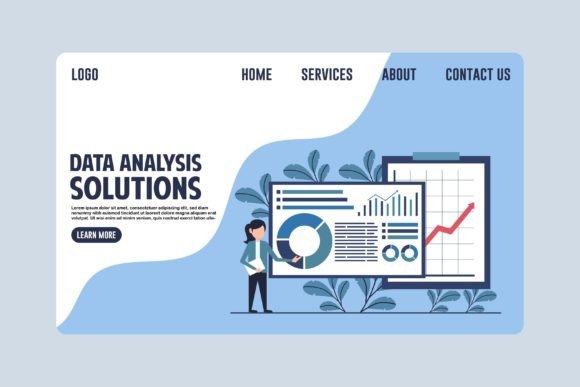
Mastering Landing Page Data Analysis Solutions for Scalable Vector Design
In the rapidly evolving landscape of digital marketing and web design, the ability to interpret user behavior is just as critical as the visual appeal of a website. Professionals across various sectors, from seasoned business owners to creative hobbyists, increasingly rely on sophisticated Landing Page Data Analysis Solutions to optimize their online presence. However, the effectiveness of these analytical tools is often inextricably linked to the technical quality of the assets they help evaluate. When a landing page features high-performance graphics that remain crisp at any size, the data gathered regarding user engagement becomes significantly more reliable and actionable.
The intersection of robust data analytics and scalable vector graphics represents a pivotal moment in modern web strategy. Unlike raster images that degrade when enlarged, vector-based designs offer a level of flexibility that aligns perfectly with the diverse requirements of today's multi-device internet ecosystem. This article explores how integrating high-quality vector resources with advanced data analysis can transform raw metrics into strategic growth opportunities.
The Technical Foundation: Why Vector Graphics Matter in Analytics
Before diving deep into the mechanics of data interpretation, it is essential to understand the underlying asset structure that drives user experience. A common misconception in the industry is that image resolution is a static property. In reality, the choice between raster and vector formats dictates how a user interacts with content across different screen densities and sizes. When utilizing Landing Page Data Analysis Solutions, analysts must account for load times, rendering speeds, and visual clarity, all of which are superior in vector formats.
Vector graphics are mathematical descriptions of shapes rather than grids of pixels. This fundamental difference means that every element on a design template is 100% vector. Whether a visitor accesses a site via a massive desktop monitor or a compact mobile device, the graphics scale up or down without losing quality. This scalability ensures that the visual hierarchy intended by the designer remains intact, preventing distortion that could confuse users or lead to premature bounce rates. For researchers and educators analyzing user retention, this consistency is paramount; if an image blurs on a tablet, the user's frustration is recorded as negative engagement data, skewing the results.
Furthermore, the ability to easily edit vector files in any vector graphics software provides a unique advantage for iterative testing. In the world of A/B testing, where minor changes can yield significant shifts in conversion rates, the speed of asset modification is crucial. Designers can transform, scale, add, remove elements, or text, and recolor components instantly. This agility allows teams to implement rapid design variations based on real-time feedback from their analytics platforms, creating a tighter loop between observation and optimization.
Impact on Core Web Vitals and User Perception
Search engines and data analysis tools heavily weigh Core Web Vitals, which include metrics like Largest Contentful Paint (LCP) and Cumulative Layout Shift (CLS). Vector files, particularly those optimized in EPS formats, often result in smaller file sizes compared to high-resolution JPEGs or PNGs while maintaining superior sharpness. Smaller file sizes contribute directly to faster load times, a key factor in keeping users engaged long enough for data collection tools to register meaningful interactions.
When a landing page loads quickly and displays crisp imagery, users are more likely to explore further. This increased dwell time provides richer datasets for Landing Page Data Analysis Solutions to process. Conversely, a page burdened by heavy, pixelated images may suffer from high bounce rates, resulting in sparse or misleading data. Therefore, the decision to use vector sources is not merely an aesthetic choice but a strategic one that underpins the integrity of the entire analytical framework.
Transforming Raw Data into Strategic Insights
Once the technical foundation is established with scalable, high-quality graphics, the focus shifts to the application of data analysis. The primary goal of any Landing Page Data Analysis Solution is to convert raw numbers—clicks, scrolls, hover times—into a narrative that explains user intent. With a library of versatile vector assets, such as the 100 vector source files included in comprehensive design packages, businesses can tailor their visual storytelling to match specific audience segments identified through data.
Consider a scenario where data reveals that a specific demographic responds better to abstract illustrations over photographic realism. With traditional raster assets, swapping these out might require commissioning new photography or finding stock images that fit specific dimensions. With vector files, however, the process is streamlined. Designers can recolor existing illustrations to match brand guidelines or modify elements to highlight different value propositions. This responsiveness ensures that the visual content evolves alongside the insights gained from data analysis.
Moreover, the versatility of vector graphics extends to the creation of infographics, which are powerful tools for presenting complex data simply. Educators and researchers often need to communicate findings to broad audiences. By using vector-based templates, they can create infographics that are legible on both printed reports and mobile screens. The ability to add or remove text and elements without compromising quality makes these assets ideal for dynamic reporting, where data points change frequently.
Segmentation and Personalization Through Visual Flexibility
Modern data analysis allows for granular segmentation of audiences. Users can be categorized by location, device type, referral source, or behavior history. To maximize the impact of these segments, the visual content of the landing page should reflect their specific context. Vector graphics excel here because they can be programmatically altered or manually adjusted to suit different contexts.
For instance, a global campaign might require localized versions of a hero image. Instead of creating separate high-resolution images for each region, a single vector master file can be used to swap out text, adjust colors to cultural preferences, or modify icons to be locally relevant. This approach reduces storage costs and simplifies version control, ensuring that the data collected from each segment is comparable and consistent. The inclusion of high-resolution JPGs in professional vector packages further aids in previewing these changes before final deployment, bridging the gap between design and development.
Practical Applications Across Industries
The synergy between scalable design and data-driven decision-making is applicable across a wide spectrum of industries. From e-commerce startups to established educational institutions, the principles remain the same: clear visuals drive engagement, and engagement generates data.
- E-Commerce and Retail: Online retailers rely heavily on banner ads and product showcases. Using vector graphics for these elements ensures that product details remain sharp on all devices. Data analysis solutions can then track which visual styles drive higher click-through rates, allowing retailers to refine their catalogs dynamically.
- SaaS and Technology: Software companies often use complex diagrams and interface mockups on their landing pages. Vector formats allow these technical illustrations to be scaled infinitely, ensuring clarity during demos or presentations. Analytics can reveal which features users engage with most, guiding future product development and UI updates.
- Education and Research: Academic institutions and research bodies use infographics to explain studies. The ability to edit vector files easily means that new data can be integrated into existing visual frameworks without starting from scratch. This efficiency accelerates the dissemination of knowledge.
- Digital Marketing Agencies: Agencies managing multiple clients benefit immensely from having a library of 100 vector source files in EPS formats. These assets serve as a flexible toolkit, enabling quick turnaround times for client campaigns while maintaining high design standards that support accurate performance tracking.
The Role of Mobile Optimization in Modern Workflows
With mobile traffic surpassing desktop usage in many regions, the relevance of mobile-friendly design cannot be overstated. Vector graphics are inherently mobile-optimized due to their resolution independence. When implementing Landing Page Data Analysis Solutions, it is crucial to ensure that the data reflects the mobile experience accurately. If a graphic appears blurry on a smartphone, the user's negative reaction is captured in the metrics, potentially leading to incorrect conclusions about the content itself rather than the delivery format.
By utilizing vector assets, designers guarantee that the mobile experience is seamless. This consistency allows analysts to compare mobile and desktop data with confidence, knowing that the visual presentation was identical in quality across both platforms. The ability to transform and scale elements ensures that hero images and banners adapt fluidly to different viewport sizes, maintaining the intended impact regardless of the device.
Implementation Strategies for Maximum ROI
To fully leverage the benefits of combining vector design with data analysis, organizations should adopt a structured implementation strategy. This involves not only acquiring the right tools but also fostering a culture of continuous improvement based on empirical evidence.
- Asset Auditing: Begin by reviewing current visual assets. Identify any raster images that cause loading delays or display issues on high-DPI screens. Replace these with vector equivalents where possible, utilizing EPS files for maximum editability.
- Data Integration: Ensure that your analytics platform is configured to track interactions with specific visual elements. Heatmaps and scroll maps can provide valuable insights into how users interact with vector illustrations and infographics.
- Iterative Testing: Use the flexibility of vector files to run frequent A/B tests. Change colors, layouts, or text within the vector environment and measure the impact on conversion rates. The ease of editing vector files makes this process cost-effective and efficient.
- Cross-Platform Consistency: Verify that all vector assets render correctly across browsers and devices. Consistency is key to maintaining brand integrity and ensuring that data comparisons are valid.
- Team Collaboration: Encourage collaboration between data analysts and designers. When designers understand the goals of the data analysis, they can create vector assets that specifically target key performance indicators.
One of the most significant advantages of this approach is the long-term sustainability of the assets. Unlike trend-dependent raster images that may look dated quickly, well-crafted vector illustrations have a timeless quality. They can be updated and repurposed indefinitely, providing a lasting return on investment. The inclusion of high-resolution JPGs alongside the vector sources ensures that stakeholders can visualize the final output without needing specialized software, facilitating smoother approval processes.
Future-Proofing Your Digital Presence
As technology advances, screen resolutions will continue to increase, and new devices will emerge. Raster images will always struggle to keep pace with these changes, requiring constant regeneration. Vector graphics, by contrast, are future-proof. Their mathematical nature means they will look perfect on screens we cannot yet imagine. For businesses investing in Landing Page Data Analysis Solutions, this longevity ensures that the data collected today remains relevant and comparable in the future.
Furthermore, the trend towards interactive and animated web experiences favors vector formats. SVG (Scalable Vector Graphics), a web-standard format derived from vector sources, supports animation and interactivity without the bloat of video files. This opens up new avenues for engagement, such as animated infographics or interactive product configurators, which can generate even deeper layers of behavioral data.
Conclusion: The Synergy of Precision and Insight
The convergence of high-fidelity vector design and advanced data analysis represents the gold standard for modern digital strategy. By ensuring that every element on a design template is 100% vector, organizations unlock a level of flexibility and quality that directly enhances the reliability of their analytics. The ability to edit, scale, and transform assets without loss of quality empowers teams to respond swiftly to market demands and user behaviors.
Whether you are a business owner looking to boost conversions, a researcher aiming to present data clearly, or a creator designing the next generation of web graphics, the principles remain consistent. High-quality, scalable visuals provide the stage upon which user interactions occur, while Landing Page Data Analysis Solutions provide the script that guides future improvements. Together, they form a powerful engine for growth, innovation, and success in an increasingly competitive digital landscape. Embracing this dual approach ensures that your projects are not only visually stunning but also analytically sound, delivering measurable results that stand the test of time.