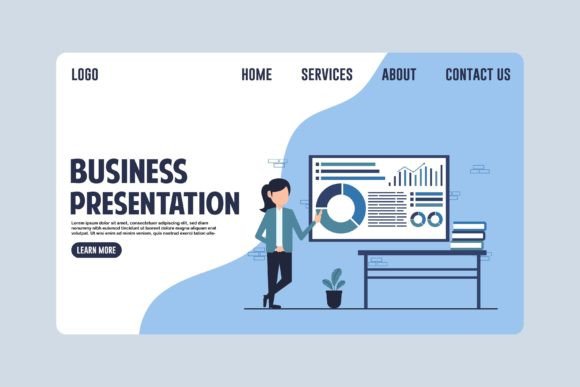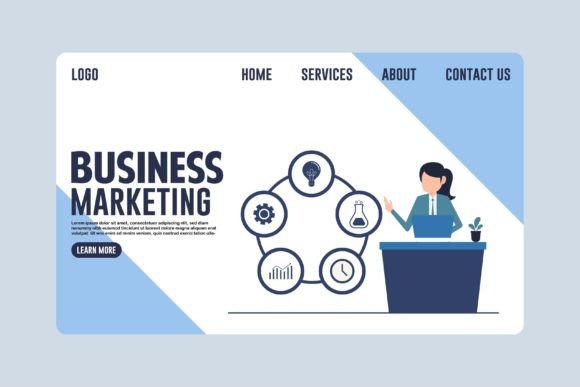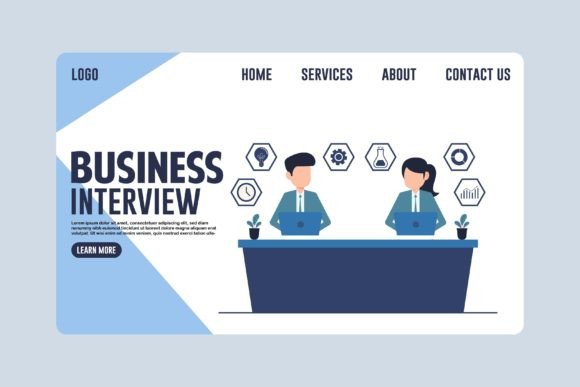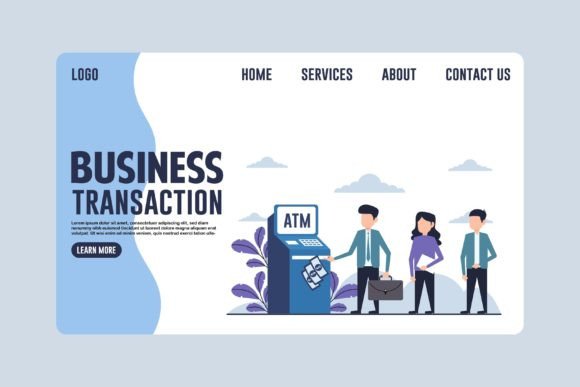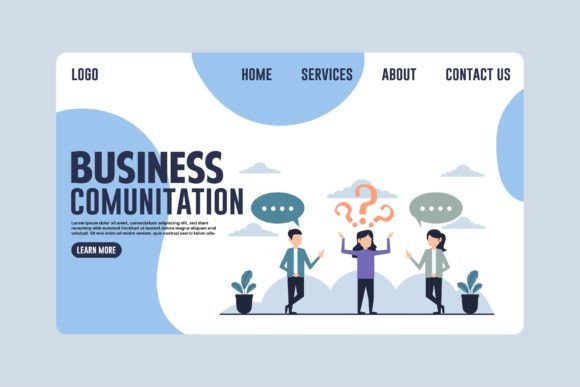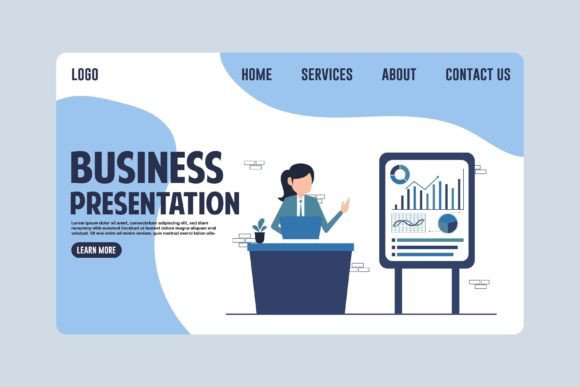
Understanding the Value of a Landing Page Business Presentation Template
In the competitive landscape of digital marketing and corporate communications, the visual representation of data and strategy is often the deciding factor between engagement and indifference. A Landing Page Business Presentation serves as a critical bridge between complex business concepts and clear, actionable user experiences. Unlike traditional slide decks designed for linear storytelling in boardrooms, this format prioritizes immediate visual impact, scalability, and adaptability across various digital touchpoints. For professionals aged 20 to 50 who are tasked with selecting the right resources for their projects, understanding the nuances of this specific design approach is essential for making informed decisions.
The core distinction of a high-quality Landing Page Business Presentation lies in its construction. When a design template is built entirely from vector graphics, it offers a level of flexibility that raster-based images simply cannot match. This technical foundation allows designers and marketers to transform, scale up or down, add or remove elements, and recolor components without any loss of quality. In an era where content must perform on everything from a small mobile screen to a massive billboard, this scalability is not just a convenience; it is a necessity.
The Technical Advantage of Vector-Based Design Assets
When evaluating design resources, the file format is often overlooked until a project hits a roadblock. The primary advantage of a Landing Page Business Presentation composed of 100% vector sources is resolution independence. Raster images, such as standard JPEGs or PNGs, are made of pixels. When you enlarge them beyond their original dimensions, they become pixelated and blurry, rendering them unusable for large formats like hero banners or printed infographics. Conversely, vector files utilize mathematical formulas to define shapes and lines. This means you can scale a single icon to the size of a building facade, and it will remain crisp and sharp.
This capability significantly impacts workflow efficiency. If a designer needs to adjust the color scheme of a presentation to match a new brand identity, a vector-based template allows for instant recoloring of individual elements. There is no need to recreate graphics from scratch or hunt for new assets. Furthermore, the ability to easily edit vector files in any standard vector graphics software empowers teams to customize layouts dynamically. Whether the goal is to simplify a complex infographic for a quick social media post or expand a landing page section for a detailed product launch, the underlying structure remains intact and editable.
For organizations managing multiple channels, this versatility translates into cost savings and faster turnaround times. Instead of commissioning custom illustrations for every campaign, a robust library of vector assets can be repurposed endlessly. The inclusion of high-resolution JPG previews alongside the source EPS files ensures that stakeholders can review designs quickly without needing specialized software, while the final production files remain ready for professional editing.
Comparing Formats: Vector Templates vs. Static Slide Decks
When choosing resources for business communication, it is helpful to compare a Landing Page Business Presentation against traditional static slide decks or fixed-image templates. Traditional PowerPoint or Keynote templates often rely heavily on pre-set layouts that can be difficult to modify without breaking the design integrity. While they serve well for linear presentations, they frequently lack the modularity required for modern web design.
In contrast, a vector-based Landing Page Business Presentation is inherently modular. Each element—charts, icons, characters, and backgrounds—is a distinct object that can be manipulated independently. This makes it superior for creating responsive web graphics, mobile web interfaces, and dynamic hero images. A static deck might look perfect on a projector but fail when resized for a mobile app interface. A vector template, however, adapts seamlessly. It supports the "design once, deploy everywhere" philosophy that is crucial for modern digital strategies.
Another significant tradeoff involves the learning curve. Working with vector files requires familiarity with software like Adobe Illustrator, CorelDRAW, or Affinity Designer. For non-designers, this might seem like a barrier compared to drag-and-drop slide tools. However, the long-term benefits of owning editable source files often outweigh the initial time investment in learning the basics. Teams that invest in understanding these tools gain the freedom to iterate rapidly, whereas those relying on static templates may find themselves limited by the constraints of the original design.
Evaluating Use Cases: Where This Format Shines
Not every project requires a full suite of vector assets, but there are specific scenarios where a Landing Page Business Presentation is the optimal choice. These include:
- Web Graphics and Hero Images: Websites demand crisp visuals at various screen densities. Vector assets ensure that hero sections load quickly and display sharply on Retina displays and standard monitors alike.
- Mobile Web and App Interfaces: Mobile screens vary wildly in size and resolution. Vector graphics allow for fluid resizing, ensuring that UI elements remain legible and aesthetically pleasing on both small smartphones and larger tablets.
- Infographics and Data Visualization: Complex data sets require precise scaling. When presenting financial results or market analysis, the ability to zoom in on specific data points without losing clarity is vital for maintaining credibility.
- Banners and Digital Advertising: Ad platforms often have strict size requirements. A vector template allows marketers to generate dozens of ad variations from a single master file, adjusting dimensions and colors to fit different campaigns instantly.
Conversely, if a project involves heavy photo manipulation or requires photorealistic textures, a purely vector approach might not be sufficient. In such cases, a hybrid approach using vector overlays on high-quality photography may be more appropriate. Understanding these limitations helps prevent the misuse of resources and ensures that the chosen tool aligns with the project's aesthetic goals.
Decision Factors for Selecting Your Design Resources
When deciding whether to invest in a comprehensive Landing Page Business Presentation package containing 100 vector source files, several factors should guide your evaluation. First, consider the longevity of the project. If the design will be used for a one-off event, a simpler template might suffice. However, for ongoing branding initiatives, product launches, or continuous marketing campaigns, the ability to evolve the design over time is invaluable. The included EPS files provide a future-proof asset library that can grow with your organization.
Second, evaluate the diversity of your output channels. If your team produces content for print, web, and social media simultaneously, the consistency provided by a unified vector system is a major advantage. It ensures that brand guidelines are adhered to across all mediums, reducing the risk of visual inconsistency. The ability to recolor and rearrange elements without quality loss means that a single template can support multiple sub-brands or seasonal campaigns.
Third, assess the internal skill set of your team. While vector software has a learning curve, many modern tools have become more intuitive. If your team lacks design expertise, the availability of high-resolution JPGs within the package allows for immediate use in basic contexts, while the vector files remain available for future customization or hand-off to external designers. This dual-format approach offers a safety net for teams transitioning toward more advanced design workflows.
Strategic Tradeoffs and Limitations
While the benefits are substantial, it is important to acknowledge the tradeoffs. The primary limitation is file management. A collection of 100 vector files requires organized storage and version control to avoid confusion. Without a structured naming convention and folder hierarchy, locating specific assets can become time-consuming. Additionally, the initial setup time for customizing a vector template is generally higher than using a pre-rendered image. You must open the file, identify the layers, and make adjustments before exporting the final asset.
Furthermore, vector files are not always compatible with every platform. Some older content management systems (CMS) or email marketing tools may not render SVG files correctly, requiring conversion to raster formats for specific use cases. However, since the package typically includes high-resolution JPGs, this is rarely a dealbreaker. The key is to understand the workflow: use vectors for creation and editing, and export to the appropriate format for deployment.
Maximizing the Potential of Your Assets
To get the most out of a Landing Page Business Presentation template, users should adopt a strategic approach to customization. Start by auditing the existing elements to see how they align with your current brand guidelines. Utilize the recoloring features to match your palette exactly, rather than forcing your brand to fit the template. Take advantage of the scalability to create a style guide that covers various sizes, from favicons to large format prints.
Consider the narrative flow of your presentation. Since you can add or remove elements freely, tailor the content density to your audience. A technical audience might appreciate detailed infographics, while a general consumer base may respond better to simplified, bold visuals. The flexibility of vector graphics allows you to test different versions quickly, gathering feedback and iterating until the message resonates perfectly.
Ultimately, the decision to use a Landing Page Business Presentation built on vector technology comes down to a commitment to quality and adaptability. In a digital environment where attention spans are short and standards are high, having access to professional-grade, editable assets provides a significant competitive edge. By choosing resources that prioritize scalability and editability, businesses can ensure their visual communications remain clear, consistent, and impactful across every channel they engage.