Watercolor Candy Cane Christmas in July: A Practical Asset Evaluation
The concept of "Christmas in July" has evolved from a simple summer marketing gimmick into a legitimate strategy for maintaining year-round engagement. For designers, entrepreneurs, and content creators, the challenge lies in finding assets that capture the festive spirit without feeling out of place during the height of summer. This is where the Watercolor Candy Cane Christmas in July collection becomes a relevant tool in the creative workflow. Unlike generic clipart that often feels stiff or overused, this specific set offers a hand-painted aesthetic that bridges the gap between traditional holiday imagery and modern, organic design trends.
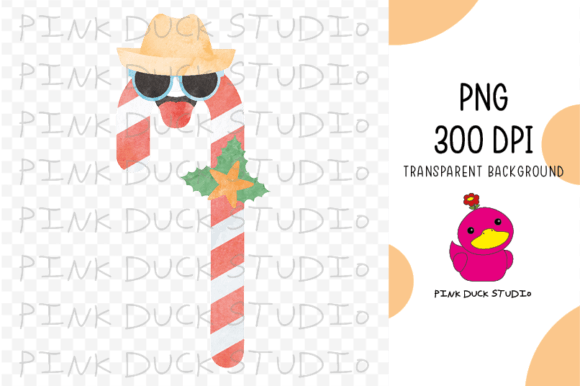
Evaluating digital assets requires looking beyond the thumbnail. The true value of the Watercolor Candy Cane Christmas in July files lies in their technical specifications and the flexibility they offer within professional projects. Each file is delivered as a PNG with a transparent background, standing approximately 12 inches in height at a resolution of 300dpi. These metrics are not merely numbers; they represent a commitment to print-quality output. In an era where many free resources suffer from pixelation when scaled, having a high-resolution source file allows professionals to produce large-format prints, detailed packaging, or crisp digital advertisements without compromising visual integrity.
Technical Specifications and Print Readiness
For small business owners and freelancers who manage their own production pipelines, the distinction between web-ready and print-ready graphics is critical. The 300dpi resolution provided in this collection ensures that the watercolor textures remain sharp even when printed on physical goods. Whether you are creating custom invitations for a mid-year corporate event, designing merchandise for a boutique shop, or producing educational materials for a summer-themed curriculum, the clarity of these images holds up under scrutiny.
The transparent background feature further enhances usability. It eliminates the need for time-consuming photo editing work to remove white borders, allowing for immediate integration into complex layouts. When layering these candy cane elements over summer backgrounds—perhaps pairing them with bright yellows, ocean blues, or warm sunset gradients—the transparency ensures seamless blending. This technical reliability reduces friction in the design process, enabling creators to focus on composition and messaging rather than asset cleanup.
Aesthetic Versatility and Design Application
The watercolor style itself is a significant factor in the collection's appeal. Watercolor textures inherently possess a softness and irregularity that vector graphics often lack. This organic quality makes the Watercolor Candy Cane Christmas in July set particularly effective for projects aiming for a handmade, artisanal, or nostalgic feel. It avoids the sterile look of flat design while remaining sophisticated enough for professional branding.
In practical application, these assets shine when mixed with other elements. Because the license prohibits using the clipart as standalone graphics, users are encouraged to integrate them into larger compositions. For instance, a marketer might use a single candy cane element as part of a larger social media graphic featuring promotional text and brand logos. An educator could incorporate the image into a lesson plan about seasonal traditions, combining it with typography and diagrams. The strength of the collection lies in its ability to serve as a supporting character in a broader visual narrative, adding a touch of whimsy without overwhelming the primary message.
Consider the scenario of a summer catalog for a gift shop. Using standard, bold red-and-white stripes might clash with a layout designed around pastel summer tones. However, the muted, blended hues typical of watercolor art allow the candy cane motif to sit comfortably alongside floral patterns or beach themes. This adaptability makes the Watercolor Candy Cane Christmas in July collection a versatile resource for brands looking to launch early holiday promotions or capitalize on the novelty of celebrating winter festivities during summer months.
Licensing Framework and Commercial Usage
Understanding the licensing terms is essential for any professional utilizing third-party digital assets. The agreement governing the Watercolor Candy Cane Christmas in July collection is structured to protect the original artist while providing clear pathways for commercial use. Users are permitted to utilize the items to create new end physical products or end digital products, provided the final result is notably distinct from the original artwork.
This clause is vital for entrepreneurs. It means you can take a single candy cane image, combine it with your own typography, color overlays, and additional graphics, and sell the resulting t-shirt, mug, planner, or eBook cover. The key requirement is transformation; the final product must be a unique creation where the original asset is just one component. This encourages creativity and ensures that the market is not flooded with identical resold files.
Conversely, the restrictions are equally clear and necessary for maintaining the value of the asset. Reselling the digital files as-is, redistributing them in new sets, or making them publicly available in a way that allows others to extract the original artworks is strictly forbidden. Furthermore, converting these raster images into vector formats (like SVG) for resale or automated merchandising platforms such as Zazzle or Redbubble is prohibited. These limitations prevent the devaluation of the artist's work and ensure that the effort put into creating high-quality watercolor textures is respected.
For serious hobbyists and small business owners, this licensing model strikes a balance. It allows for profit generation through value-added products while preventing the kind of mass-distribution that dilutes the uniqueness of the design. It requires the user to act as a creator, not just a distributor, which aligns well with the goals of those building authentic brands.
Target Audience and Strategic Fit
Who benefits most from this specific collection? The primary audience includes professionals who require high-quality, thematic visuals but lack the time or skill to paint original watercolors. This encompasses:
- Small Business Owners: Those running boutiques, bakeries, or gift shops looking to create seasonal signage or packaging for summer sales events.
- Freelance Designers: Creatives working on client projects that require a specific "Christmas in July" theme, needing reliable, print-ready assets to meet deadlines.
- Educators and Publishers: Professionals creating summer reading programs, activity books, or newsletters that incorporate holiday history or traditions.
- Content Creators and Bloggers: Individuals producing visual content for websites or social media channels focused on lifestyle, crafting, or seasonal planning.
These groups share a common need for assets that are both aesthetically pleasing and legally secure for commercial use. The Watercolor Candy Cane Christmas in July collection addresses this by offering a ready-to-use solution that fits seamlessly into existing workflows. It removes the barrier of entry for high-end design, allowing non-illustrators to produce polished, professional results.
Limitations and Considerations
While the collection offers significant value, it is important to acknowledge its limitations. As PNG files, they are raster-based, meaning they cannot be infinitely scaled without loss of quality if resized significantly beyond their original dimensions. While 300dpi at 12 inches is sufficient for most applications, billboard-sized printing would require different asset types. Additionally, the prohibition against vector conversion limits their use in scenarios requiring extreme scalability or specific software requirements that demand editable paths.
Furthermore, the requirement to create a "notably distinct" end product demands a certain level of design competence. Simply placing the candy cane on a blank canvas and selling it does not comply with the license. Users must be prepared to invest time in composition, typography, and additional graphic elements to ensure their final product meets the criteria for commercial distribution.
Conclusion
The Watercolor Candy Cane Christmas in July collection represents a thoughtful intersection of artistic quality and practical utility. By providing high-resolution, transparent PNG files with a clear and fair licensing structure, it empowers creators to explore seasonal themes outside of the traditional December window. Its watercolor aesthetic adds a layer of warmth and authenticity that resonates with modern audiences, while the technical specifications ensure reliability across various media.
For professionals seeking to enhance their summer marketing campaigns, create unique merchandise, or develop engaging educational content, this asset offers a solid foundation. However, its value is fully realized only when used creatively, respecting the boundaries of the license and leveraging the flexibility of the format to craft something truly one-of-a-kind. In a crowded marketplace of digital resources, collections like this stand out by prioritizing both the needs of the creator and the integrity of the original art.